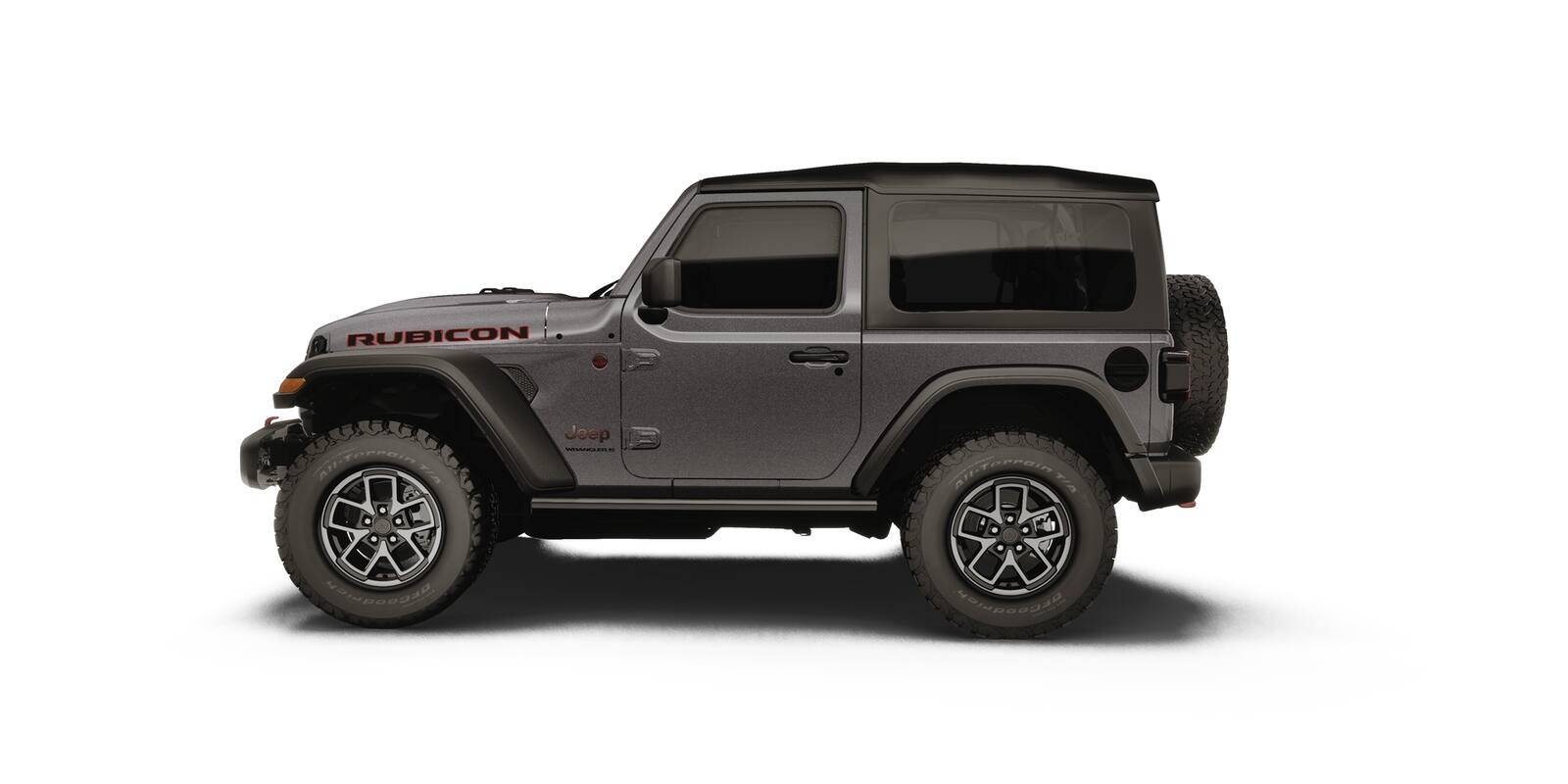
Is the 2027 Wrangler Rubicon Right for You?
The Rubicon suits drivers who want serious off-road capability and also need a dependable 4x4 when winter weather shuts down the hills.
Using 4x4 on Fayetteville's Icy Hills
Jeep recommends 2H on clear, dry roads and 4H for continuous traction on snow and ice. The standard part-time Rock-Trac system is meant for slippery surfaces, not dry pavement, which matters during ice storms when roads switch between clear and frozen. The available full-time Rock-Trac system adds a 4H Auto mode that manages front and rear torque on its own, so you can leave it engaged on mixed roads.
Lockers, Low Range and Tires
The locking differentials and 4:1 low range are for low-speed off-road use, like crawling a rocky trail or pulling a trailer up a steep ramp. On icy streets, leave the lockers off and keep speeds down. The Rubicon's 33-inch off-road tires help in slush and mud, but Jeep notes that winter-rated tires give the best results in freezing conditions.

Rock-Trac 4x4 vs. Everyday AWD
An AWD SUV like the Jeep Cherokee or Grand Cherokee sends power to all four wheels automatically and rides more like a car. The Wrangler Rubicon trades some on-road comfort for solid axles, low range and lockers. If you mainly need winter traction around town, AWD may be enough; if you also want to explore trails in the Ozarks, the Rubicon is built for it.
Comparing the Rubicon with the Sport, Willys or Sahara? Ask our team and we'll walk you through the differences.